 Choreograph
When work changes, the whole team must know.
Deal desks, customer service, research, capital calls and healthcare share a problem: one new fact can invalidate work that looked finished. People and agents need a shared process that can reopen, reconcile and explain what happened.
Designed workflows. These five examples are design studies; their declarations and demonstrations follow launch. Accounts payable is already proven on Wanakam’s real invoices, with cut-over at release. See the proven capabilities.
Deal desk: quotes and discounts
Close the deal on terms every team has approved.
Why it is hard
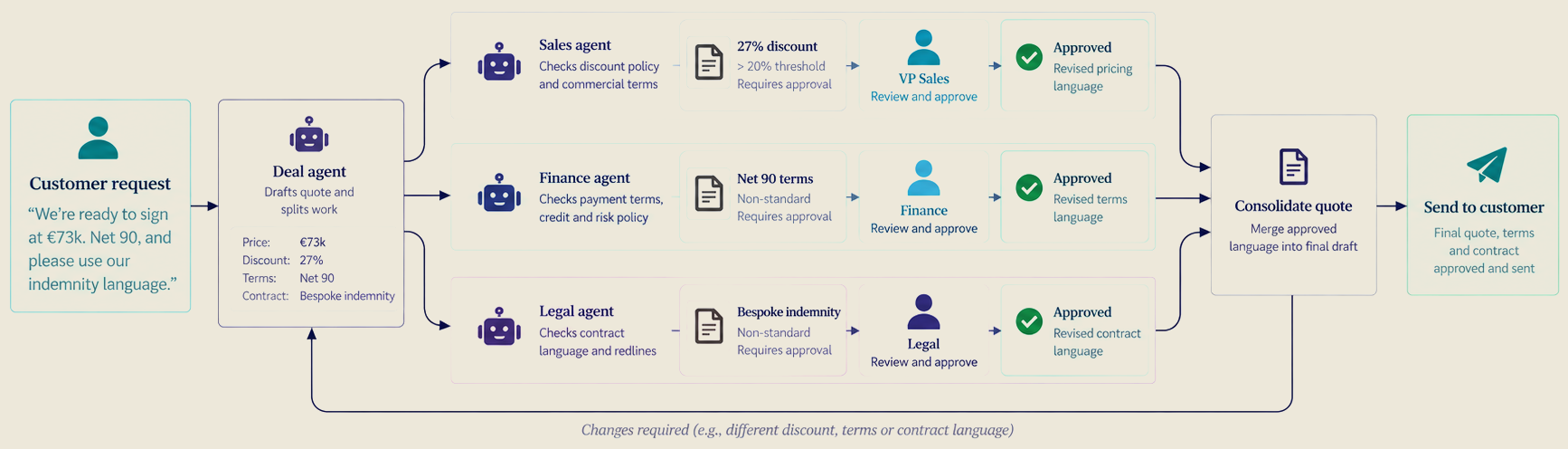
A discount, payment term or contract edit can change the deal other teams approved. Sales, finance and legal work in parallel, but the customer receives one quote. One approval does not make the whole offer ready to send.
What separate tools leave to you
A CRM tracks the deal; specialist agents check individual terms. Keeping approvals attached to the current quote—and reopening the right checks when terms change—still needs explicit coordination logic.
How Choreograph approaches it
The proposed workflow delegates commercial, financial and legal checks to separate tasks. Each routes exceptions to the right approver. Approved terms are consolidated; revisions return for review. Sending waits for all required approvals.
Design example; declarations follow launch. Reopening is a recorded reaction, not a claim that every task changes atomically.
Customer Support that Acts
Resolve the customer’s problem across every system it touches.
Why it is hard
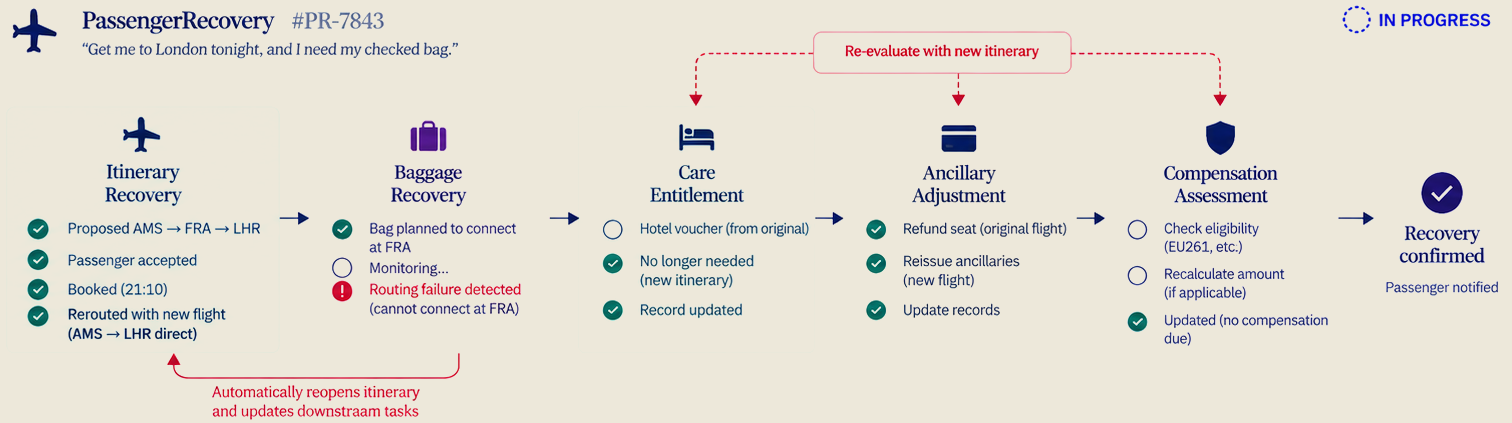
Rebooking a cancelled flight also changes baggage routing, hotel needs, extras and compensation. If the bag cannot make the connection, the replacement journey needs another look. A confirmed ticket is not the same as a resolved problem.
What separate tools leave to you
Support tools track the conversation; AI agents can take individual actions. The hard part is keeping those actions consistent as the customer’s situation changes. That requires explicit knowledge of which obligations a change reopens—and what must happen before the case can close.
How Choreograph approaches it
The proposed recovery task connects the itinerary, baggage, care, extras and compensation. A failed baggage connection reopens the itinerary and prompts affected tasks to be checked again. Agents act within policy; exceptions go to people. The case closes only when the obligations agree.
Design example; declarations follow launch. Reopening is a recorded reaction, not a claim that every task changes atomically.
Research and diligence
Keep the investment thesis consistent with the evidence.
Why it is hard
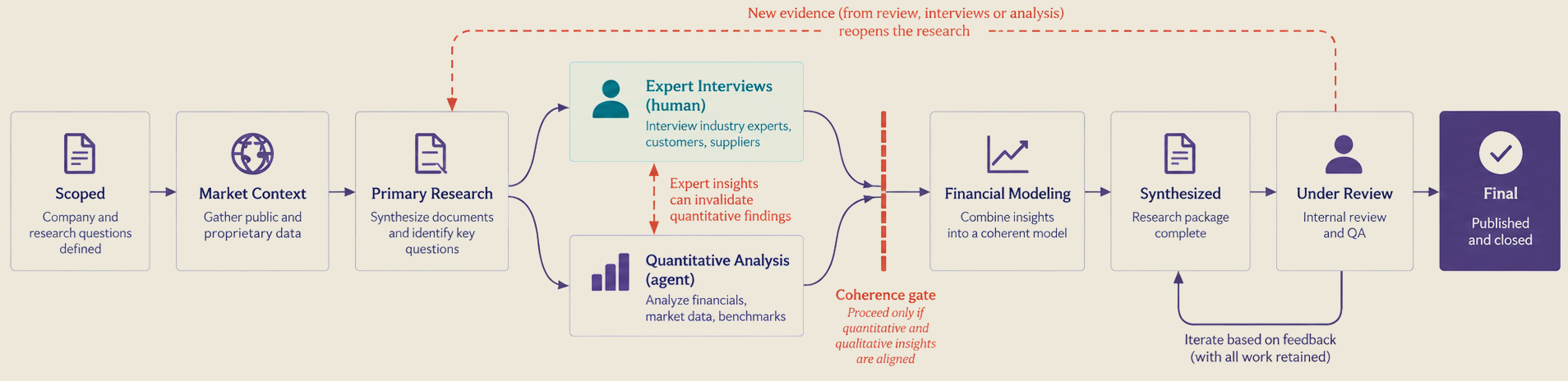
An expert interview contradicts a primary source after the model has been built. Which assumptions, calculations and conclusions need another look? The expensive mistake is a polished report whose parts no longer agree.
What separate tools leave to you
A task tracker can mark research complete; a workflow engine can run each branch reliably. The team still needs explicit rules connecting changed evidence to the work it invalidates. That is coordination logic the application otherwise has to build.
How Choreograph approaches it
The proposed workflow runs sourcing, interviews and quantitative work in parallel, then joins them for synthesis and review. A contradiction reopens the affected branch; revision preserves the work already done and the history of why it changed.
Design example; declarations follow launch. Reopening is a recorded reaction, not a claim that every task changes atomically.
Private equity capital calls
Close on reconciled evidence, not a collection of green ticks.
Why it is hard
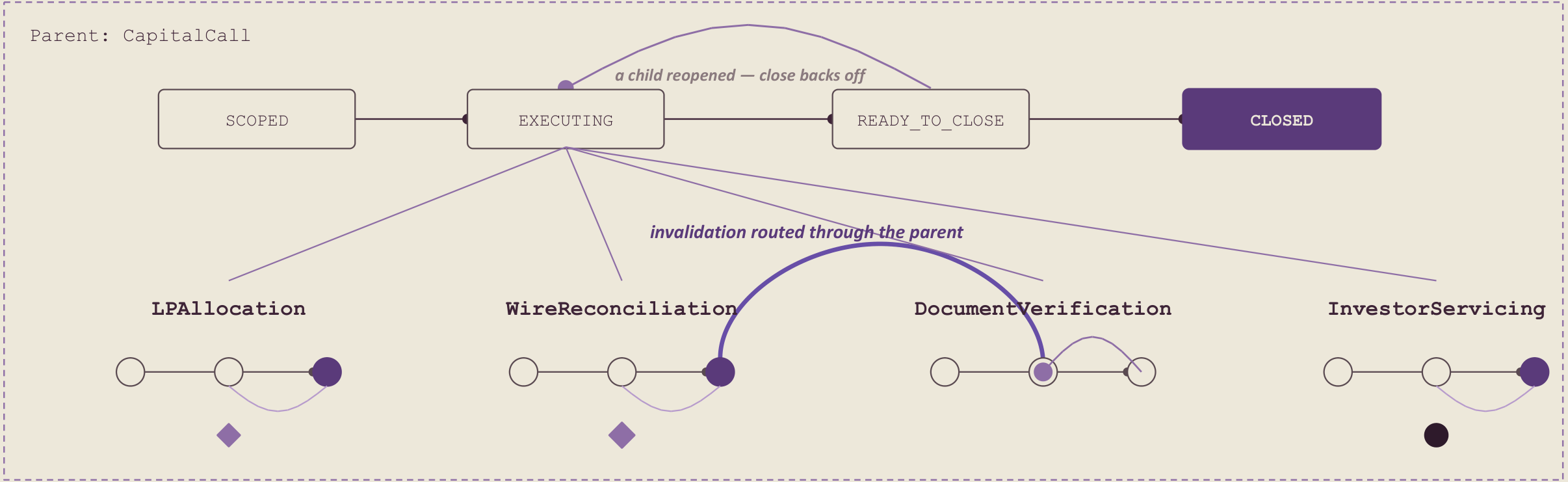
Allocations, bank receipts, documents and investor questions progress on different clocks. A late wire mismatch may change an allocation or reopen a document check. “Done” in one team’s tracker is not the same as ready to close.
What separate tools leave to you
Durable execution helps a bank check finish; spreadsheets and issue trackers help each team organise its piece. Keeping the closing decision consistent with all four workstreams still requires custom dependencies, hand-offs and a shared audit history.
How Choreograph approaches it
The proposed parent task coordinates allocation, wire reconciliation, document verification and investor servicing. When evidence changes, the affected work reopens and the closing decision is revisited. People retain the decisions; agents assist with checks and reconciliation.
Design example; declarations follow launch. Reopening is a recorded reaction, not a claim that every task changes atomically.
Healthcare coordination
Keep readiness current when a clinical finding changes.
Why it is hard
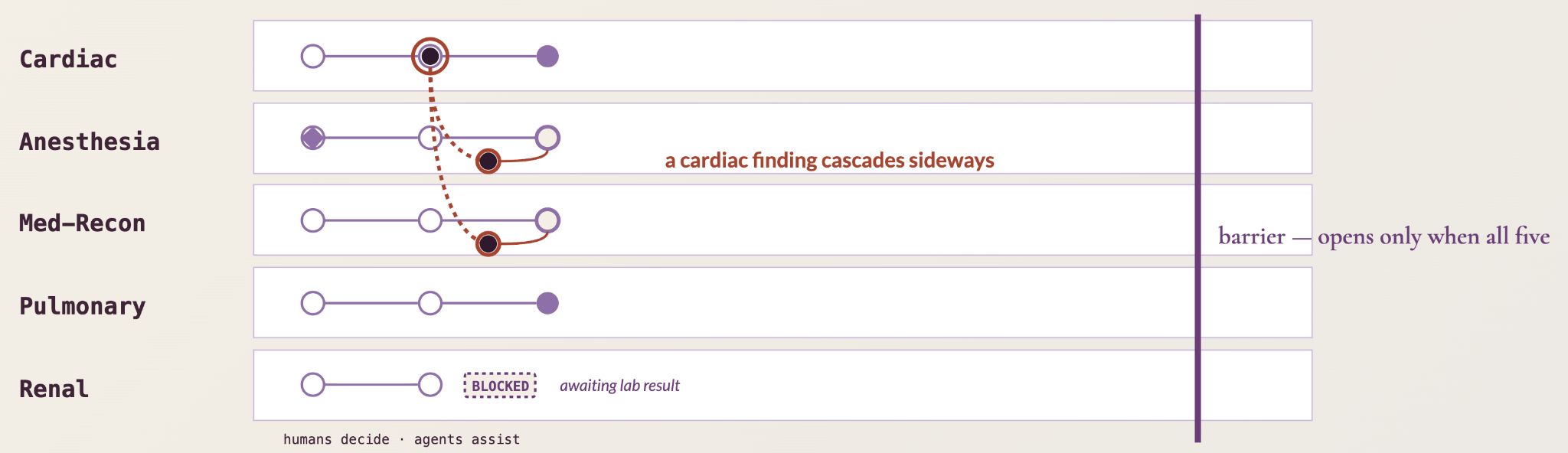
Cardiac, anaesthesia, medication, pulmonary and renal clearances can arrive at different times. A new finding may affect more than one team. A completed checklist can be stale before the next appointment.
What separate tools leave to you
Separate departmental queues record local progress. Connecting a changed finding to every affected clearance, distinguishing waiting from completed work, and preserving the reason for each hand-off requires additional coordination across those queues.
How Choreograph approaches it
The proposed workflow makes waiting and reopened work visible across the five clearances. A new finding routes review to the affected teams and updates readiness. Clinicians decide; agents assist. This is administrative coordination, not a clinical decision system.
Design example; declarations follow launch. Reopening is a recorded reaction, not a claim that every task changes atomically.